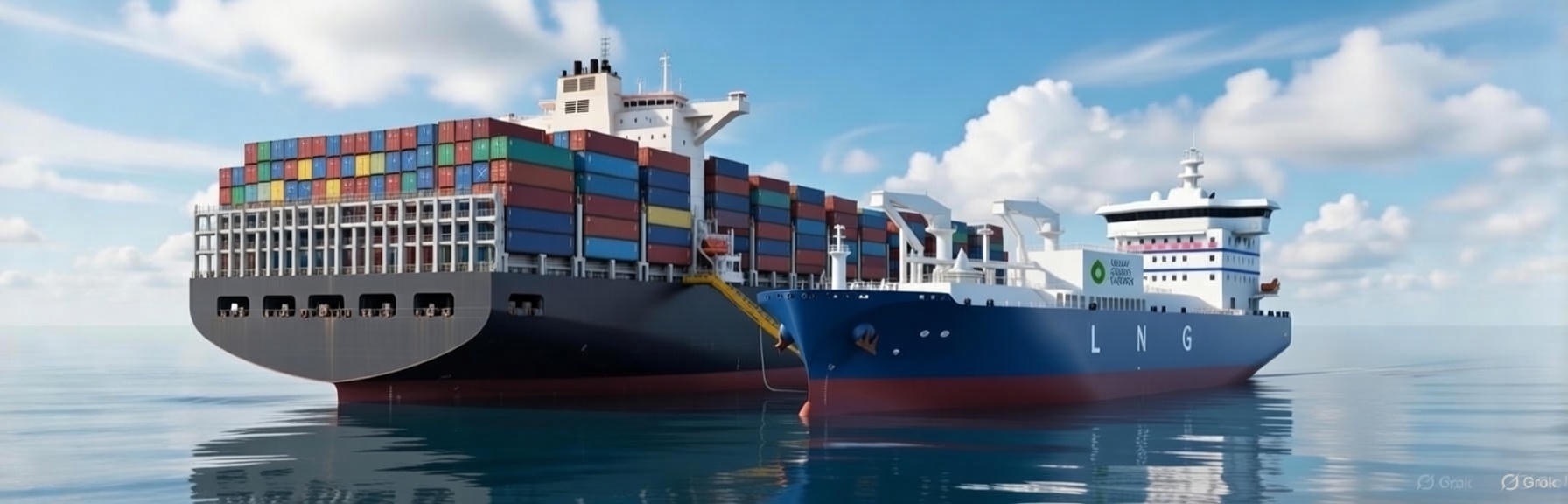
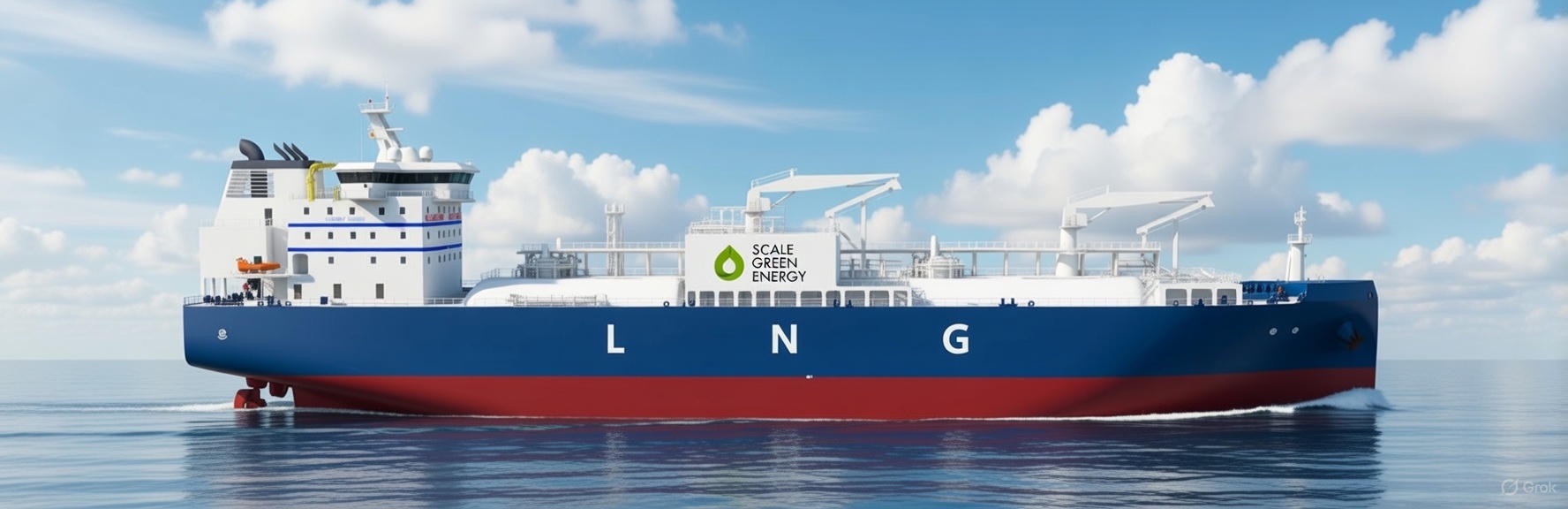
Naturgy and Enagás, through the subsidiary Scale Green Energy, have reached an agreement to promote the decarbonisation of maritime transport in the Iberian Peninsula by constructing and chartering the latest generation ‘Mistral LNG’ vessel to supply liquefied natural gas (LNG) and BioLNG to all types of vessels.
The vessel will have a cargo capacity of 18,900 m³. Scale Green Energy started construction in early 2026, will operate it, and will be chartered by Naturgy in 2028 under a long-term contract.
The ‘Mistral LNG’ will operate in the Iberian Peninsula as its main market, reinforcing the area as a strategic hub in southern Europe for the bunkering or supply of sustainable fuels, as well as in the area of the Strait of Gibraltar and the Canary Islands, among other destinations in the Atlantic.
The vessel will have a length of 138.8 metres, a dual fuel engine, a service speed of 13 knots and a range of more than 4,500 nautical miles. Designed to deliver LNG and bio-LNG fuel, the vessel will be equipped with advanced technology to minimise emissions and optimise efficiency.
With this initiative, Naturgy positions itself as a strategic operator in the Iberian LNG bunkering market, which is expected to experience exponential growth in the coming years. The company also advances in its commitment to promote the energy transition by offering competitive solutions to its clients. With extensive knowledge of the energy supply sector, the company plays a key role in supplying Spain as the main importer of natural gas.
For its part, Enagás ―through its subsidiary Scale Green Energy― consolidates its position as a leading LNG bunkering shipowner in southern Europe by adding this new vessel to its current fleet of three: Levante LNG, Alisios LNG and Haugesund Knutsen, contributing to the European strategy to reduce emissions in maritime transport and generating encouraging LNG plants in Spain. The seven regasification plants in Spain are already adapted to supply LNG for bunkering, and those in Barcelona, Cartagena, Huelva and Gijón have already started the service of supplying BioLNG to vessels and tankers.
Growing demand for alternative fuels
This project will help meet the growing demand for alternative fuels in maritime transport and compliance with new European regulations requiring progressive emission reductions linked to maritime fuels. In 2024, orders for LNG and bioLNG-powered vessels doubled compared to 2023 and, according to forecasts, demand for LNG bunkering will continue to increase progressively in the Iberian Peninsula in the coming years.
LNG and bioLNG are the best positioned alternative fuels at the moment to lead the energy transition as they will have a larger fleet in the coming years and more infrastructure to offer bunkering. Compared to traditional fuels, LNG eliminates 100% of sulphur oxide (SOX) emissions, 80-90% of nitrogen oxides (NOX) and 25% of CO2. The use of LNG as a maritime fuel in Spain could reduce around 2 million tonnes of CO2 by 2030, which would be equivalent to introducing more than one million electric vehicles on the market.